Chest Recoil: Why Leaning Fails BLS Skills Check
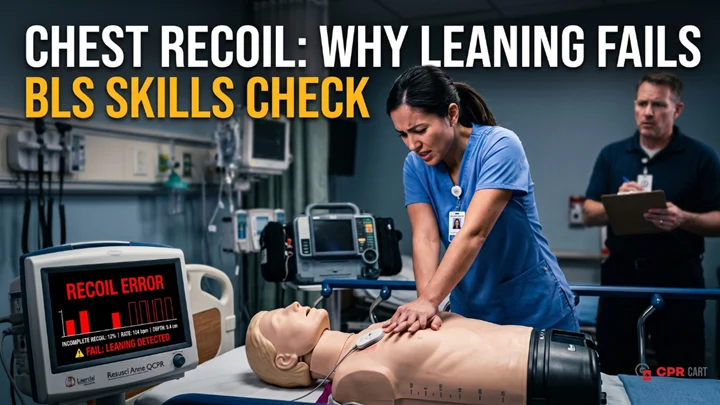
Recoil - Why Leaning on the Chest Fails Your BLS Skills Check

When healthcare providers think about high-quality CPR, they usually focus on compression depth and compression rate. Most students entering a Basic Life Support (BLS) skills session know they should push hard and push fast. Yet one of the most common reasons students struggle during a BLS skills check has nothing to do with pressing too … Read more
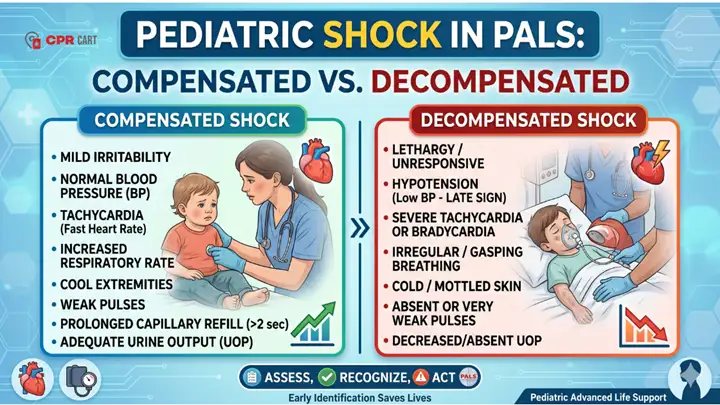
Pediatric Shock in PALS: Compensated vs. Decompensated

Pediatric Shock in PALS Compensated vs. Decompensated

Recognizing shock early is one of the most important skills taught in Pediatric Advanced Life Support (PALS). Children do not typically deteriorate in the same way adults do. A pediatric patient may maintain a normal blood pressure despite worsening circulation and oxygen delivery. This ability to compensate can create a false impression of stability and … Read more

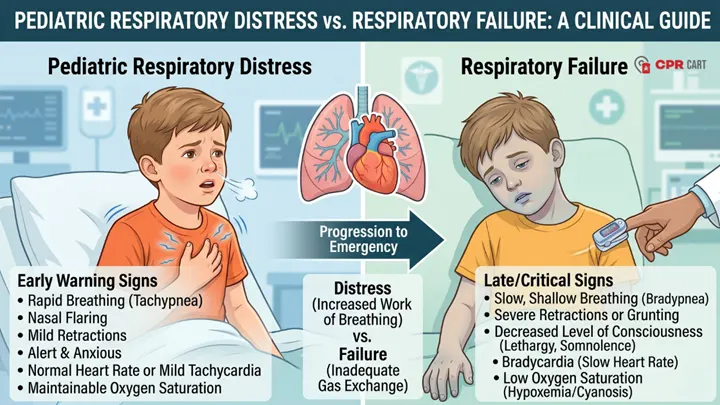
Pediatric Respiratory Distress vs. Respiratory Failure

Pediatric Respiratory Distress vs. Respiratory Failure

Recognizing respiratory compromise early is one of the most critical skills taught in Pediatric Advanced Life Support (PALS). Unlike adults, children frequently present with breathing problems long before they experience cardiovascular collapse. Identifying a worsening respiratory status creates a vital window of opportunity for intervention before a critical event occurs. One of the most important … Read more

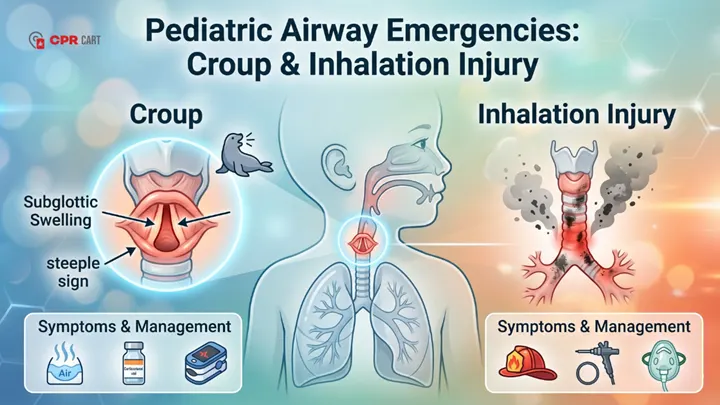
Pediatric Airway Emergencies: Croup & Inhalation Injury

Pediatric Airway Emergencies Croup & Inhalation Injury

When a child cannot breathe, seconds feel like hours. In pediatric emergency medicine, airway compromise is the leading catalyst for cardiac arrest. Unlike adults, children have a significantly higher metabolic rate and oxygen demand—about 6 to 8 mL/kg per minute compared to an adult’s 3 to 4 mL/kg. Combined with a lower functional residual capacity, … Read more

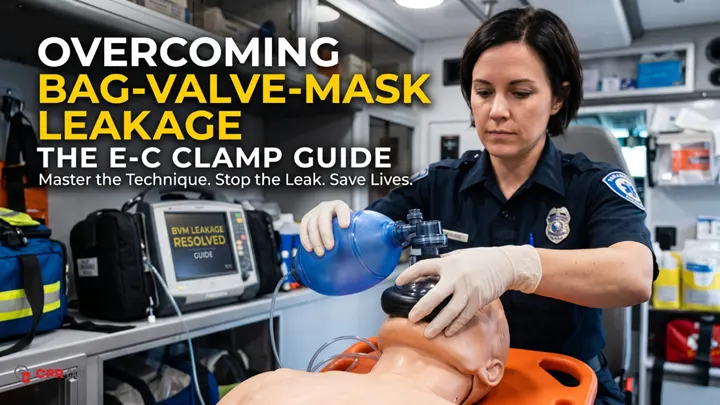
Overcoming Bag-Valve-Mask Leakage: The E-C Clamp Guide

Overcoming Bag-Valve-Mask Leakage - The E-C Clamp Guide

Bag-valve-mask (BVM) ventilation is one of the most important skills in emergency response and one of the most commonly performed incorrectly. During a BLS skills check, many students understand compression sequences and AED use but struggle when it comes to maintaining a proper mask seal. A leaking mask means oxygen escapes instead of reaching the … Read more

Does Travel Nursing Compliance Accept Blended Learning?

Does Travel Nursing Compliance Accept Blended Learning

Travel nurses work on fast-moving timelines. Assignments can change every 13 weeks, credential deadlines can appear with little notice, and agencies often require current certifications before a contract can move forward. Because of that, many nurses ask an important question: Does travel nursing compliance accept blended learning certification programs? The short answer: Often yes—but only … Read more

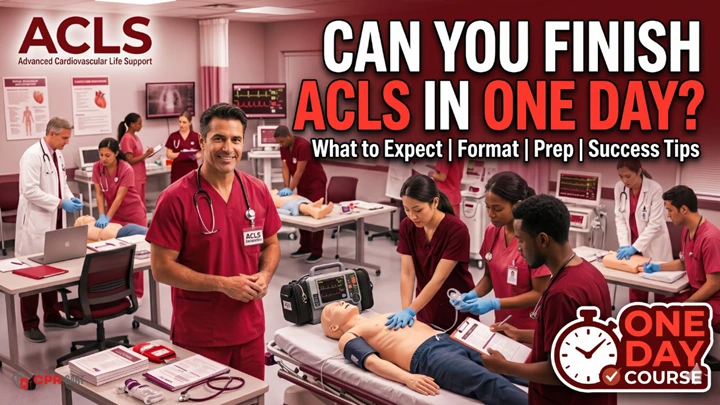
Can You Finish ACLS in One Day? What to Expect

Can You Finish ACLS in One Day What to Expect

Healthcare professionals rarely have unlimited time for certification. A travel nurse receives a new assignment with little notice. A hospital onboarding department requests updated credentials. A provider suddenly notices an expired certification card before an upcoming shift. When deadlines become tight, many healthcare workers ask: Can you finish ACLS in one day? The short answer … Read more

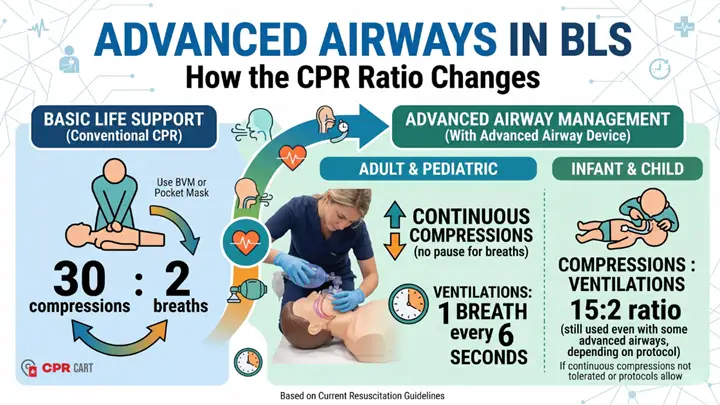
Advanced Airways in BLS: How the CPR Ratio Changes

Advanced Airways in BLS How the CPR Ratio Changes

Cardiopulmonary resuscitation (CPR) follows a structured rhythm of chest compressions and rescue breaths. During standard Basic Life Support (BLS), providers are trained to use specific compression-to-ventilation ratios. However, many healthcare providers become confused once an advanced airway enters the picture. Questions such as “Do compressions stop after intubation?”, “Does the ratio stay 30:2?”, and “How … Read more

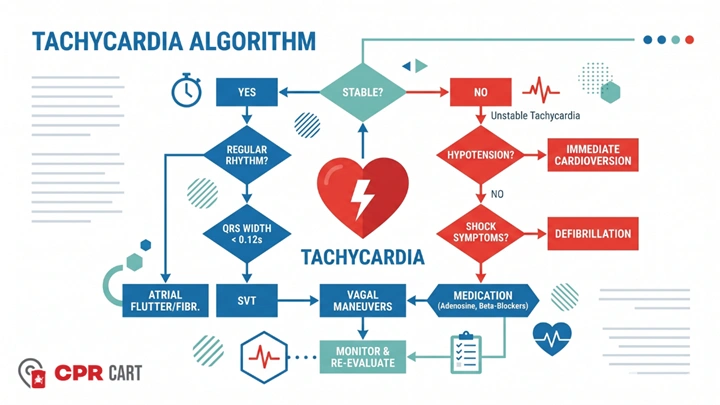
Understanding the PALS Tachycardia Algorithm

Understanding the PALS Tachycardia Algorithm

Pediatric Advanced Life Support (PALS) requires healthcare providers to rapidly assess and treat critically ill children. Among the most essential skills in the PALS toolbox is the management of tachycardia. Unlike adult algorithms, pediatric tachycardia requires a nuanced approach because a rapid heart rate is often the body’s response to a stressor (like fear or … Read more

Top 10 PALS Exam Questions & Answers: Expert Study Guide

Top 10 PALS Exam Questions & Answers_ Expert Study Guide

The Pediatric Advanced Life Support (PALS) certification exam is notoriously challenging. It requires healthcare providers to quickly synthesize information regarding physiology, pharmacology, and ECG interpretation to make critical decisions. As an experienced instructor in emergency medical training, I have guided hundreds of students through this process. While memorization has its place, the PALS exam is … Read more