


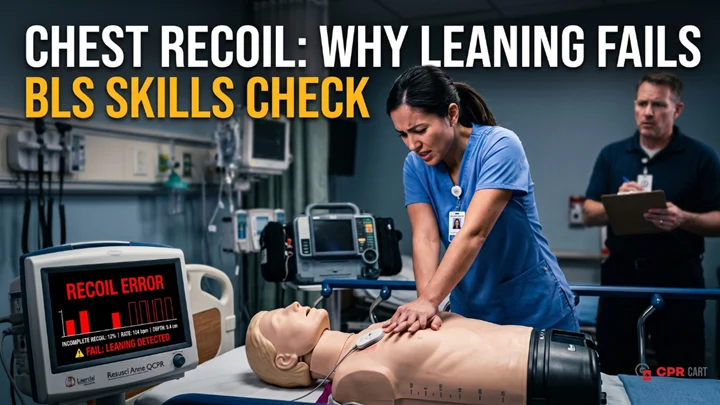
When healthcare providers think about high-quality CPR, they usually focus on compression depth and compression rate. Most students entering a Basic Life Support (BLS) skills session know they should push hard and push fast. Yet one of the most common reasons students struggle during a BLS skills check has nothing to do with pressing too softly or moving too slowly.
It is leaning.
Incomplete chest recoil is one of the most overlooked CPR mistakes, but it can significantly reduce the effectiveness of chest compressions. Even experienced providers unknowingly keep pressure on the chest between compressions. During a BLS skills check, instructors and CPR manikins are specifically looking for this mistake because it directly affects blood flow and patient outcomes.
Understanding why chest recoil matters can improve your CPR performance, help you pass your BLS skills assessment, and potentially improve survival during real-world cardiac emergencies.
Quick Answer: What Is Chest Recoil in CPR?
Chest recoil is the complete return of the chest to its normal position after each compression during CPR.
Full recoil allows the heart to refill with blood before the next compression. If a rescuer keeps pressure on the chest between compressions even slightly, the heart cannot refill adequately, reducing blood circulation.
In simple terms: push down, release completely, then compress again.
This concept is so important that incomplete release can lead to poor CPR quality and may cause failure during a BLS skills check.
Why Chest Recoil Matters During CPR
Many people think CPR works because compressions squeeze blood out of the heart. That is only half the process.
The release phase is equally important.
During recoil:
- The chest expands naturally
- Pressure inside the chest decreases
- Blood returns to the heart
- The heart chambers refill
- Oxygenated blood becomes available for the next compression
Without complete recoil, the heart starts each compression cycle with less blood inside it.
Imagine trying to pump water from a bottle that never fully refills. Every pump becomes weaker.
That is essentially what happens during CPR when rescuers lean on the chest.
What Happens When You Lean on the Chest?
Leaning means maintaining pressure on the chest after compression rather than allowing full release.
This often happens without the rescuer realizing it.
Even small amounts of pressure can:
- Reduce venous return
- Increase pressure inside the chest
- Lower cardiac output
- Reduce blood flow to the brain
- Decrease coronary perfusion
- Make CPR less effective
Research in resuscitation science repeatedly shows that incomplete recoil negatively affects circulation during cardiac arrest.
During real emergencies, this reduction in blood flow can affect patient outcomes.
Why Students Fail BLS Skills Checks Because of Leaning
Many providers are surprised when they are corrected for leaning because they believe they are performing compressions correctly.
Common reasons this happens include:
Fatigue
As compressions continue, rescuers become tired. Instead of lifting body weight completely between compressions, they unconsciously rest on the chest.
Poor Body Positioning
Leaning often occurs when shoulders are not positioned directly above the patient.
Correct CPR mechanics require:
- Locked elbows
- Straight arms
- Shoulders directly over hands
- Body weight centered
Poor positioning causes rescuers to support themselves on the patient instead of using controlled movement.
Focusing Only on Depth
Students frequently hear:
“Push at least 2 inches.”
They focus intensely on achieving compression depth and forget the release phase entirely.
Remember:
Effective CPR is not simply deep compressions.
It is: Push hard + push fast + allow full recoil + minimize interruptions
How BLS Manikins Detect Leaning
Modern BLS skills sessions increasingly use feedback devices and electronic manikins.
These systems track:
- Compression depth
- Compression rate
- Hand placement
- Compression fraction
- Recoil quality
Many students are surprised when manikin feedback identifies incomplete release. You may think your hands are lifting fully while subtle pressure remains. That is why practicing proper technique before a skills assessment matters.
If your certification process includes a quick skills evaluation after online coursework, spending extra time practicing recoil can improve your performance.
“Learn what to expect during a BLS skills session in our complete guide on First Time Taking a BLS Skills Test? Here’s What to Expect
Signs You May Be Leaning During CPR
Rescuers often cannot feel themselves leaning.
However, several warning signs suggest the issue:
- Arms become tired quickly
- Hands stay in contact with body weight between compressions
- Compression rhythm feels rushed
- You feel pressure through your palms continuously
- Feedback manikins repeatedly flag recoil errors
If you notice these issues, adjust positioning immediately.
How to Achieve Complete Chest Recoil
Fortunately, improving recoil is usually easier than fixing compression depth.
Use these techniques:
Lift Body Weight Completely
Keep your hands in contact with the chest but release downward pressure entirely.
Think:
Compress → release → compress
Do not think:
Push → rest → push
Stack Shoulders Above Hands
Position shoulders directly over the sternum.
This alignment helps you compress efficiently without relying on body weight during release.
Lock Your Elbows
Bent elbows increase fatigue and create inconsistent movement patterns.
Straight arms improve control.
Switch Rescuers Every Two Minutes
Fatigue significantly contributes to leaning.
When possible:
- Rotate providers every two minutes
- Switch during rhythm checks
- Minimize pauses
Even experienced healthcare providers become less effective over time.
Common CPR Myth: Hands Must Leave the Chest Completely
Many students overcorrect after hearing about recoil.
They assume hands should lift off the chest after every compression.
That is incorrect.
Hands should maintain contact with the sternum while pressure is removed.
Lifting hands completely can:
- Cause loss of hand position
- Slow compression delivery
- Create interruptions
The goal is pressure release, not hand removal.
Why Recoil Matters More Than People Think
High-quality CPR is built on several components working together:
- Correct compression rate
- Proper depth
- Minimal interruptions
- Correct hand placement
- Full chest recoil
Weakness in any one area decreases overall CPR effectiveness.
Chest recoil receives less attention than compression depth, yet it directly affects circulation.
That is why instructors emphasize it during BLS training and why modern CPR feedback systems actively measure it.
Improving Your BLS Performance Before Your Skills Check
Students preparing for certification often spend most of their time reviewing algorithms and written material.
However, psychomotor performance matters equally.
Before your next session:
- Practice with a feedback manikin if available
- Record yourself performing compressions
- Focus specifically on release between compressions
- Practice two-minute cycles
- Check posture and body mechanics
Small adjustments can create major improvements.
Final Thoughts
Chest compressions are not just about pushing down. They are also about letting go.
Complete chest recoil gives the heart a chance to refill and prepares the body for the next effective compression. Even slight leaning can reduce CPR quality and become the difference between passing and struggling during a BLS skills check.
Ready to put these skills to the test? Sign up for BLS Certification Class today.
Frequently Asked Questions
What does chest recoil mean in CPR?
Chest recoil means allowing the chest to return fully to its natural position after each compression. Complete recoil allows the heart to refill with blood before the next compression.
Can leaning cause you to fail a BLS skills check?
Yes. Incomplete chest recoil is a common reason students receive corrections during BLS skills assessments. Feedback manikins often detect even slight pressure remaining on the chest.
Should hands come off the chest during CPR?
No. Hands should remain in contact with the chest while all downward pressure is released.
Why does chest recoil affect blood flow?
Full recoil lowers pressure inside the chest and allows blood to return to the heart. Leaning prevents complete refill and decreases circulation.
How can I stop leaning during CPR?
Focus on body position, lock elbows, keep shoulders directly over your hands, and consciously remove pressure between compressions.