Prone CPR: How to Perform BLS on a Prone Patient
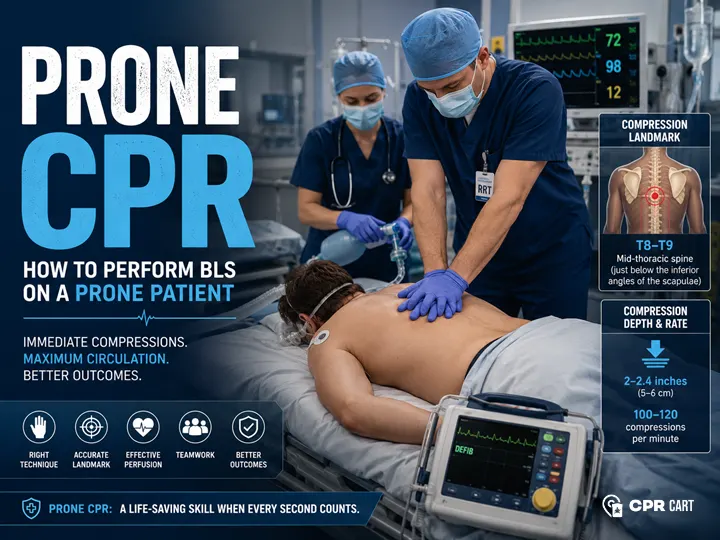
Prone CPR - How to Perform BLS on a Prone Patient

Prone CPR is cardiopulmonary resuscitation (CPR) performed while a patient remains lying face down (in the prone position). It is used when cardiac arrest occurs and immediately turning the patient onto their back would cause a dangerous delay in chest compressions or create significant clinical risk. Although standard CPR is performed with the patient supine, … Read more
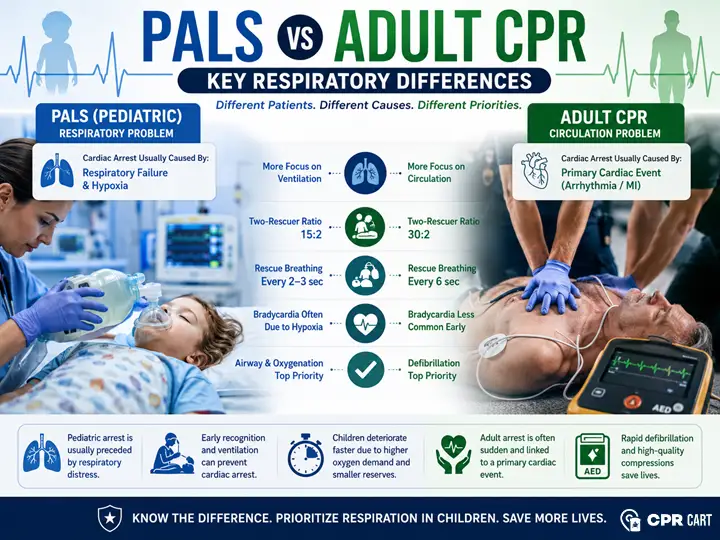
PALS vs Adult CPR: Key Respiratory Differences

PALS vs Adult CPR - Key Respiratory Differences

When healthcare providers respond to a cardiac arrest, the basic tools of resuscitation often look the same: chest compressions, ventilations, airway management, and advanced life support interventions. However, one of the most important lessons taught in Pediatric Advanced Life Support (PALS) is that children are not simply small adults. The reason is rooted in physiology. … Read more

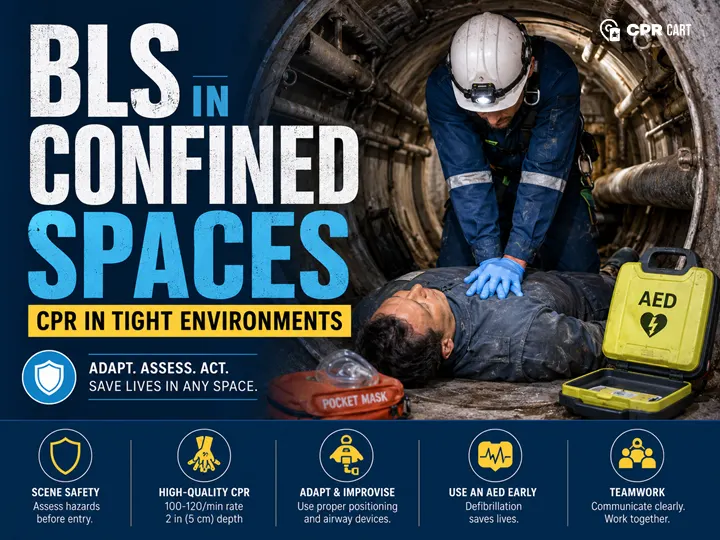
BLS in Confined Spaces: CPR in Tight Environments

BLS in Confined Spaces - CPR in Tight Environments

BLS in confined spaces refers to performing Basic Life Support (BLS) and CPR when a cardiac arrest victim is located in an area with limited access, restricted movement, or environmental hazards that make standard resuscitation difficult. Rescuers must adapt CPR techniques while maintaining high-quality compressions, effective ventilation, and scene safety. Performing Basic Life Support is … Read more

Why Blended CPR Training Is the Future of Certifications

Why Blended CPR Training Is the Future of Certifications

Healthcare professionals, first responders, workplace safety teams, and even parents need CPR certification that is credible, flexible, and efficient. Traditional classroom-only formats are no longer the only option. Today, blended CPR training is transforming how lifesaving skills are learned and maintained. In this guide, we’ll explain what blended CPR training is, how it works, and … Read more

Heart Attack vs Cardiac Arrest: Key Differences

Heart Attack vs Cardiac Arrest - Key Differences

Heart attack and sudden cardiac arrest are often used interchangeably, but they are not the same medical emergency. Understanding the difference can help you respond appropriately and potentially save a life. In simple terms: A heart attack is a circulation problem. Sudden cardiac arrest is an electrical problem that causes the heart to stop beating. … Read more

CPR on Patients with Pacemakers: Step-by-Step Guide

CPR on Patients with Pacemakers - Step-by-Step Guide

When performing CPR, most people focus on chest compressions and rescue breaths. However, patients with pacemakers require special attention to ensure life-saving efforts are both safe and effective. Understanding how to perform CPR on someone with a pacemaker can save lives while avoiding damage to medical devices. This guide provides a step-by-step approach, evidence-based recommendations, … Read more

Can CPR Break Ribs? Here’s What Really Happens

Can CPR Break Ribs - Here’s What Really Happens

When someone suddenly collapses from cardiac arrest, seconds matter. Performing CPR (cardiopulmonary resuscitation) can double or even triple survival chances. But many bystanders hesitate because they’ve heard a scary rumor: “Can CPR break ribs?” The honest answer is yes, it can but that’s not a reason to avoid CPR. In fact, effective chest compressions must … Read more

4 Frequently Asked Questions About Online CPR Certification

4 Frequently Asked Questions About Online CPR Certification

Online CPR certification is a convenient way to get certified without attending in-person classes. Whether you’re a healthcare professional needing a quick renewal or someone taking their first CPR course, online classes offer flexibility, self-paced learning, and often instant eCards. If you’re considering online CPR certification, you probably have questions. This blog answers the 4 … Read more

The AHA BLS Algorithm: A Step-by-Step Guide

The AHA BLS Algorithm - A Step-by-Step Guide

Sudden cardial arrest is a critical life-threatening medical situation requiring immediate and appropriate care. BLS algorithm is a step-by-step care guide proposed by the American Heart Association or AHA. This algorithm is a evidence-supported guide for care providers on how to care for a cardiac arrest sufferer, this guide discusses the steps of BLS algorithm, … Read more

High-Quality Chest Compressions: Depth, Rate, and Recoil

High-Quality Chest Compressions - Depth, Rate, and Recoil

High-quality chest compressions are the foundation of effective CPR and the single most important factor in improving survival from sudden cardiac arrest. Whether you are a healthcare professional or a trained bystander, compression depth, rate, and full chest recoil directly impact blood flow to the brain and heart. In this guide, we break down exactly … Read more